Firstly, hello to everyone who is new here. Welcome to my blog! It has been a very long time since I have posted an entry. Working full-time, studying part-time and having a life sure has its challenges but here I am back again ready to share some hopefully thought-provoking insights with you.
As part of my studies this semester I was required to create a video reflecting on the whiteness of the Australian curriculum which I will now share with you. I have to reiterate how limited my understanding of Indigenous cultures, perspectives and knowledge was prior to my undertaking of this Masters level unit. Hopefully, this video summarises some of the key points that need to be shared around this lack of knowledge which is evident in the limited inclusion of Indigenous perspectives embedded in our everyday learning experiences in classrooms across Australia.
This is only a snapshot of the way the Australian Curriculum is written to echo the dominant white Eurocentric ideologies. I hope this short video draws your attention to the minute details of what we teach and how we choose to teach it to ensure that you reconsider the taken-for-granted attitudes that are being reiterated. By keeping this in the back of your mind, you can consciously choose to be more inclusive in your practice!
Please feel free to leave respectful comments or questions so that we can engage in authentic, honest discussion about this important topic!
I’m back! After taking on a new role in a new school this year, I am finally able to get back to writing on my blog. It has been a very exciting start to the year and I am absolutely loving my new role as the Learning Enhancement Teacher at my new school. Part of my job involves working with and supporting teachers to develop their pedagogical practices which is a big part of the reason I started writing this blog in the first place. This post is the first instalment discussing one of the most important aspects of learning in the early years, whether it be in preschool, kindergarten or the first few years of formal schooling it is ABSOLUTELY ESSENTIAL that children continue to play. As part of my studies this semester I was fortunate enough to choose a topic to research in depth and of course as I am so passionate about play I chose to focus on this so the following few blog entries will delve into the research and how this can be implemented in the classroom.
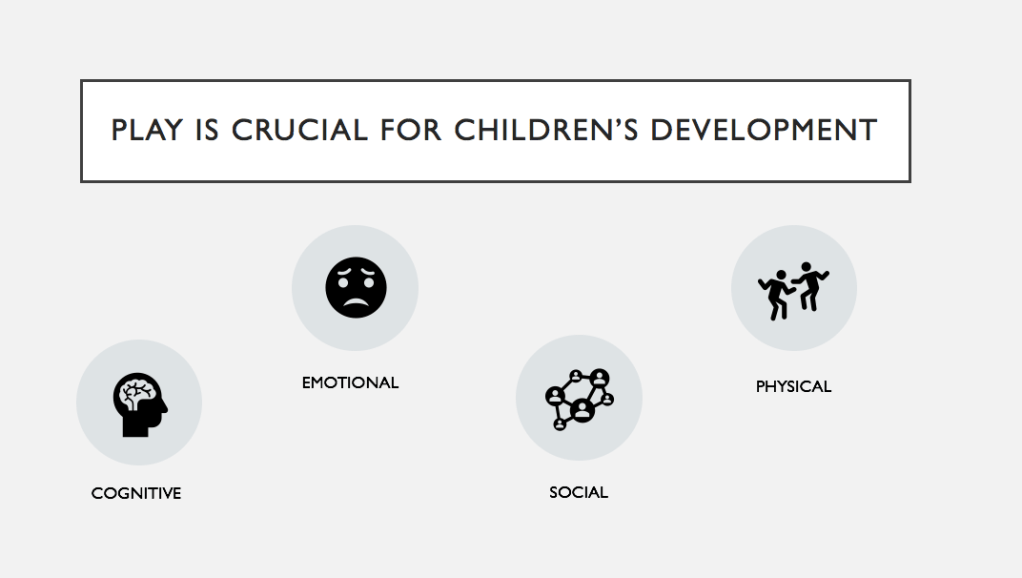
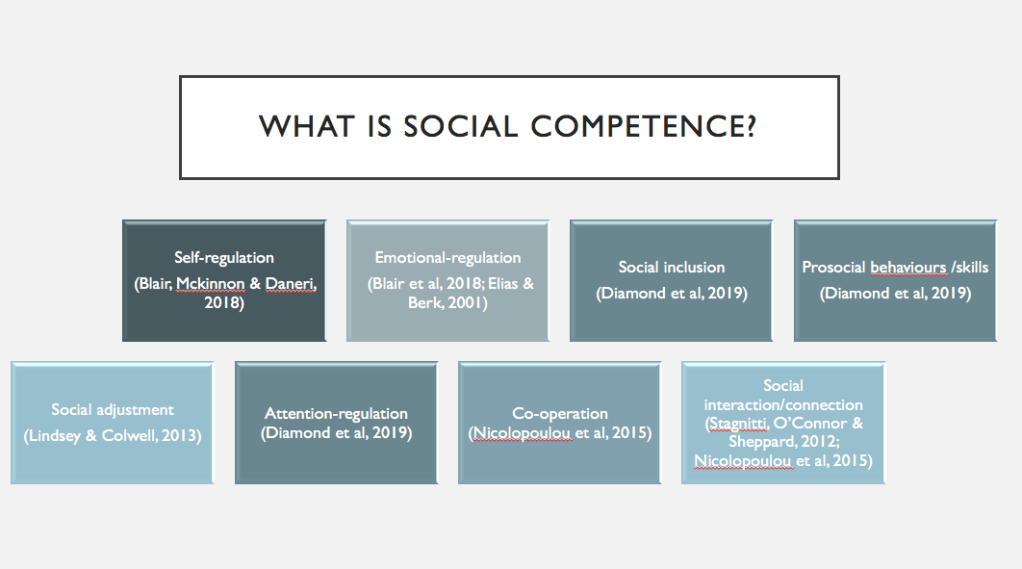
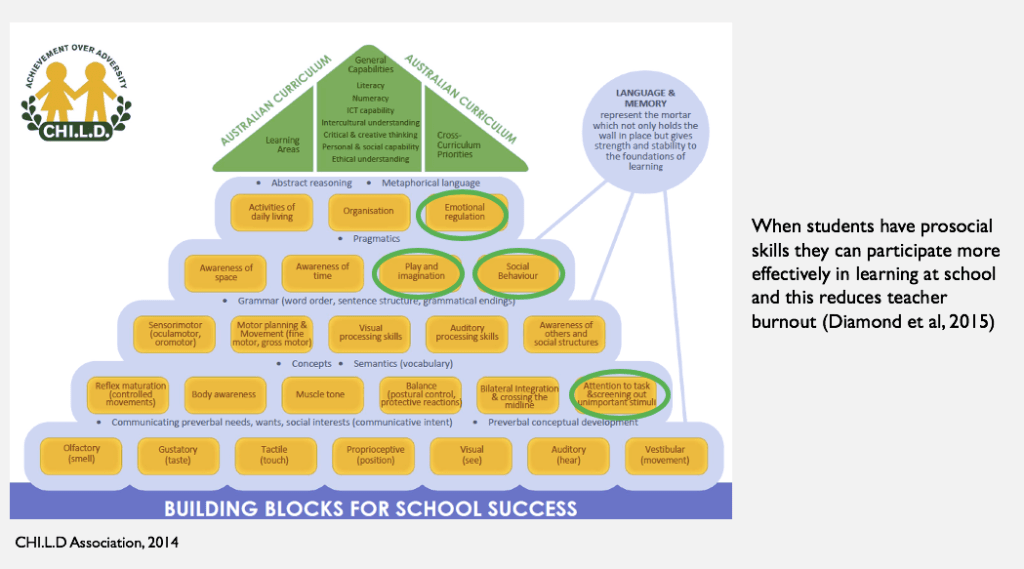
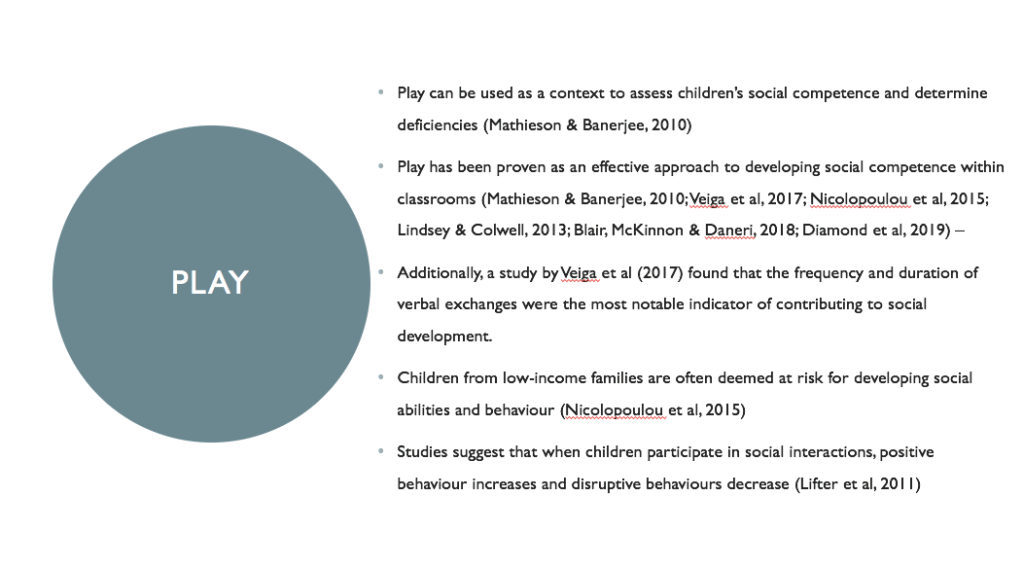
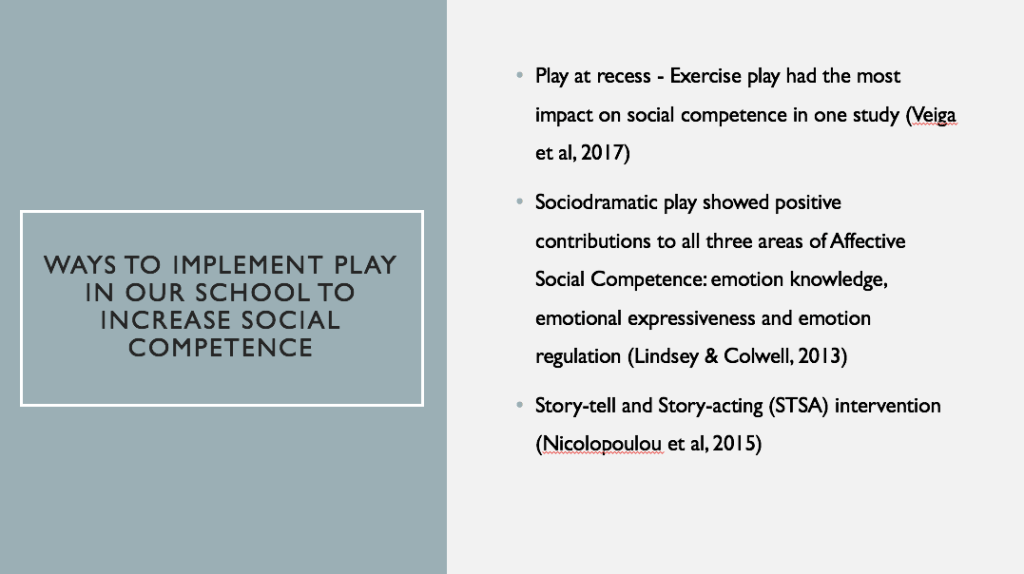
Much of the research on play identifies the importance of play for developing various skills and abilities though this blog entry will focus on the way that play supports the development of social competence.
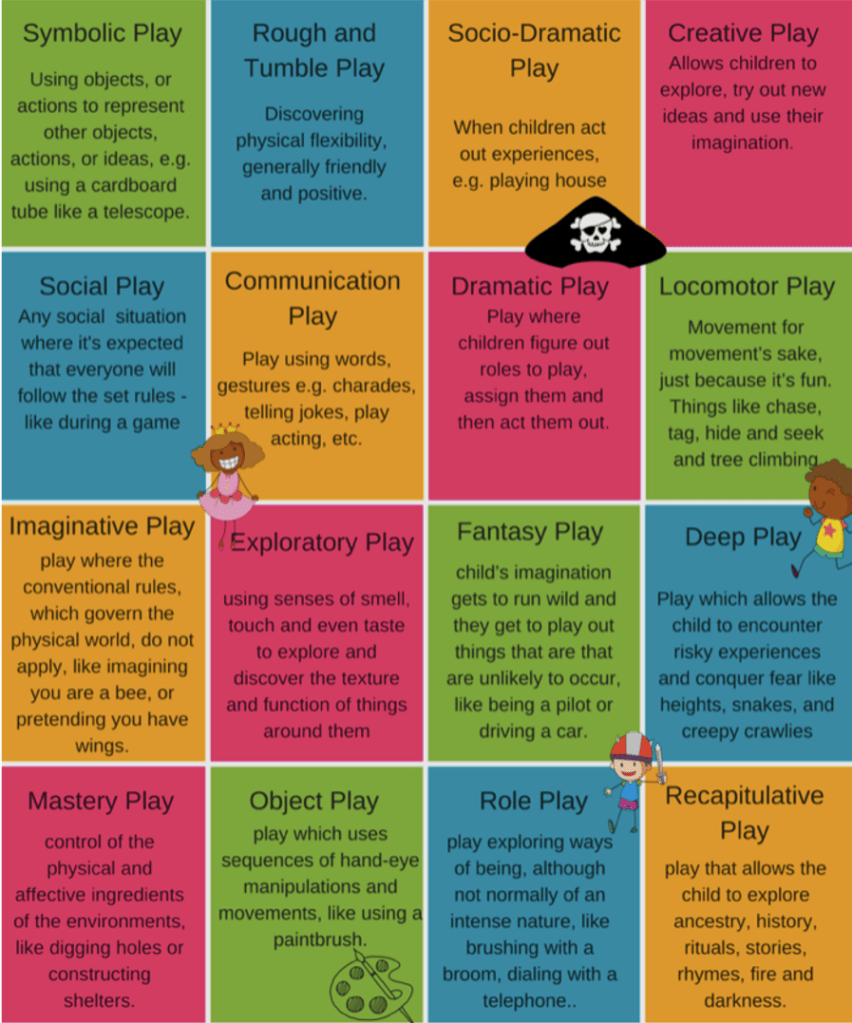
There are many different types of play that children engage in and as they grow and develop these can also vary.
(Hughes, 2002 – image created by encourageplay.com)
Stay tuned for the next blog post to read more on how to implement play in schools. Please share your own thoughts on play in the early years by commenting!
Diamond, A., Lee, C., Senften, P., Lam, A., & Abbott, D. (2019). Randomized control trial of Tools of the Mind: Marked benefits to kindergarten children and their teachers. PloS One, 14(9). DOI: 10.1371/jounoal.pone.0222447
Hughes, B. (2002). A Playworkers Taxonomy of Play Types (Graphic). Retrieved from www.encourageplay.com
Humphries, M. L., Williams, B. V., and May, T. (2018). Early childhood teachers’ perspectives on social-emotional competence and learning in urban classrooms. Journal of Applied School Psychology, 34 (2), 157-179. DOI: 10.1080/15377903.2018.1425790
Leung, C. (2011). An experimental study of eduplay and social competence among preschool students in Hong Kong. Early Child Development and Care, 181 (4), 535-548. DOI: 10.1080/03004431003611487
Lifter, K., Foster-Sanda, S., Arzamarski, C., Briesch, J., and McClure, E. (2011). Overview of play: Its uses and importance in early intervention/ early childhood special education, Infants & Young Children, 24 (3), 225-245. DOI: 10.1097/IYC.0b013e31821e995c
Lindsey, E. W., and Colwell, M. J. (2013). Pretend and physical play: Links to preschoolers’ affective social competence. Merrill-Palmer Quarterly, 59 (3), 330-360. DOI: 10.13110/merrpalmquar1982.59.3.0330
Liu, S., Yuen, M., and Rao, M. (2015). A play-based programme (Pillars of Society) to foster social skills of high-ability and average ability primary-one students in Hong Kong. Gifted Education International, 33 (3), 210-231. DOI: 10.1177/0261429415581221
Stagnitti, K., O’Connor, C., and Sheppard, L. (2012). Impact of the Learn to Play program on play, social competence and language for children aged 5-8 years who attend a specialist school. Australian Occupational Therapy Journal, 59, 302-311. Retrieved from https://doi-org.simsrad.net.ocs.mq.edu.au/10.1111/j.1440-1630.2012.01018.x
Veiga, G., de Leng, W., Cachucho, R, Ketelaar, L., Kok, J. N., Knobbe, A., Neto, C., and Rieffe, C. (2017). Social competence at the playground: Preschoolers during recess. Infant and Child Development, 26, 1-15. DOI: 10.1002/icd.1957
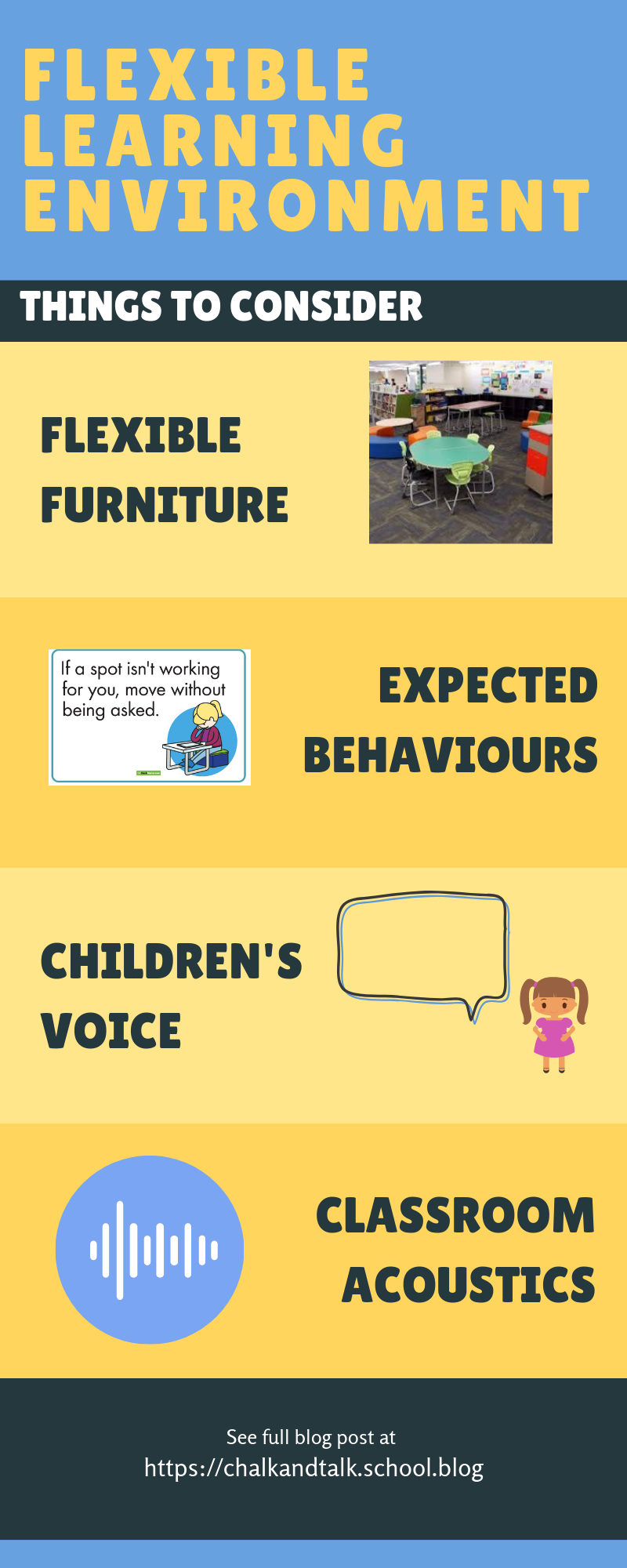
As mentioned in my previous post the environment plays an important part in children’s learning, especially in the early years. There are some simple ways that educators can establish and set up an effective, interactive and engaging environment that allows children opportunities to part-take in decision making throughout their learning.
Flexible furniture does not only mean purchasing new furniture but can also include offering various spaces for children to be productive. By providing areas on the floor including rugs, cushions or pillows this allows students opportunities to spread out and lay or sit in different positions. In this way, children are able to build their postural control through laying on their stomach while completing activities. Also in our classroom we have small individual couches that can be joined together and provide yet another way for children to sit or lay, alternative to sitting in the standard chairs. I use sit spots for explicit learning sessions to provide children with guidance on where to sit and support their spatial awareness development. We also establish listening expectations together including how we sit on the carpet.
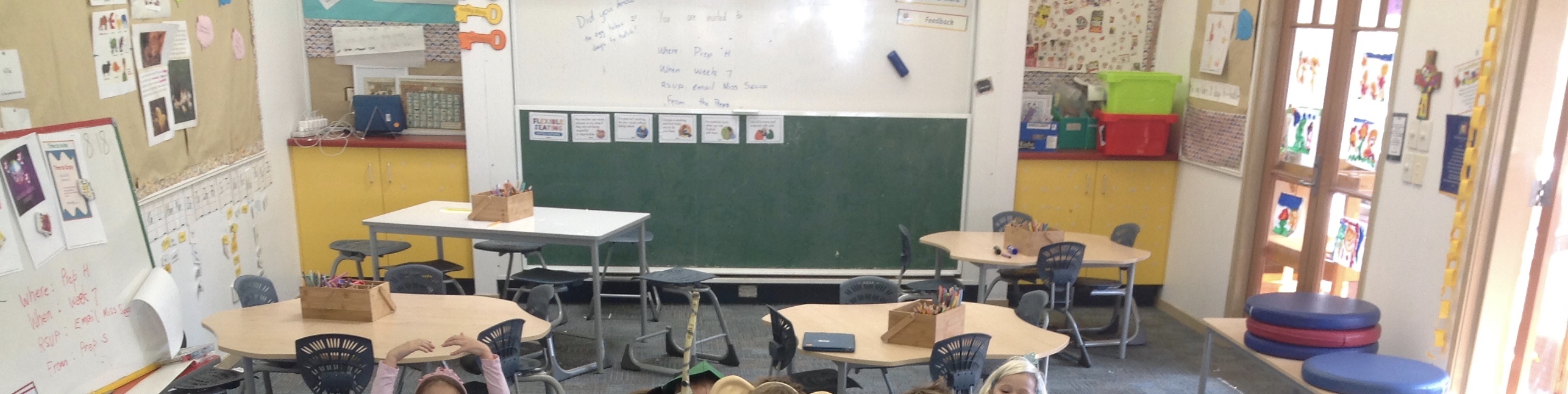
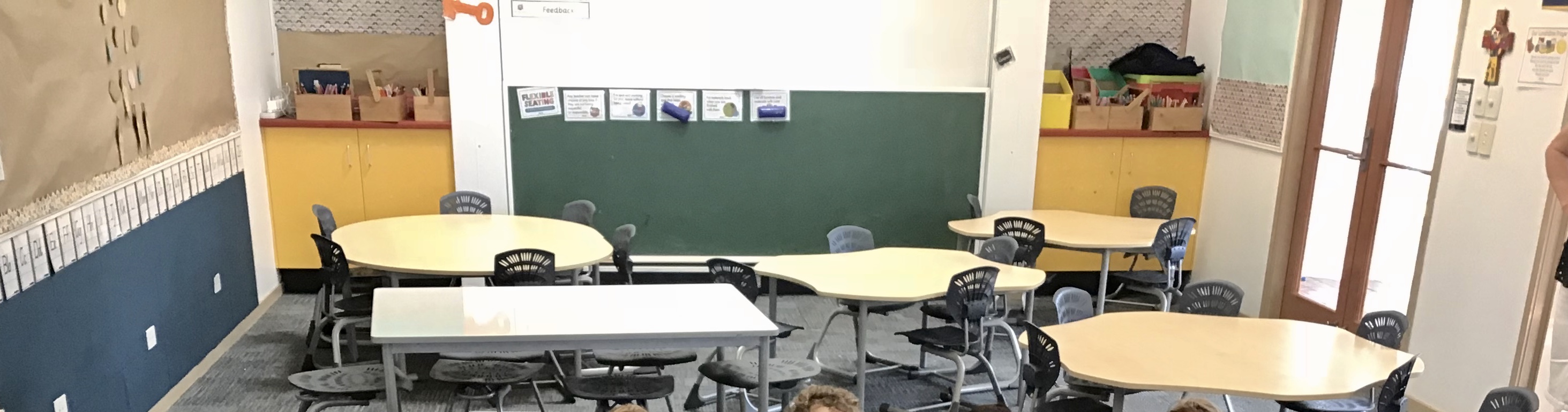
Some examples of the furniture and arrangements. The visual reminders about flexible seating are on the blackboard at children’s eye level. Just a slight rearrangement to cater for different learning purposes.
Children require areas that enable them to sit at tables, especially to complete activities such as writing where floor level spaces are not appropriate. In our classroom we have a low level table that can be used for writing but children can kneel on cushions rather than sitting in chairs which can help children who find sitting in chairs difficult. Finally our classroom also has a higher table that has stools which provides opportunities for children to stand if they prefer when working on different tasks. This table has a whiteboard surface allowing the children and teachers to record and draw responses during small group work.
The different types of furniture and creating interactive spaces only becomes an effective and engaging environment when the children are explicitly taught about each space and the purpose for each area. I often refer back to the spaces when we transition from the carpet to our individual learning areas. The children are encouraged to make decisions about where they would learn best and if I see a seat or area that they have chosen but is not effective, the student and I will discuss why it might not be working and then provide other options for making another choice. The furniture is from Furnware and I found some visual displays to support the children’s understanding of different areas and making those decisions from Teach Starter.
Children need to be a part of the decision making when planning areas around the classroom. It is important they help to brainstorm and discuss what each area can be used for and how it can be changed to suit different learning purposes. The lightweight furniture in our classroom can be easily moved around to create bigger tables for larger groups or divide the tables up to make smaller groups. My classroom is long and narrow so it has been a challenge deciding what furniture to get and how we can use it in the most effective way possible. We only have one small rectangle shaped area of linoleum for wet play activities including painting, play dough and sand etc so the children have learned that when we set up tables or plastic mats in that area, that is where the play dough stays. Through discussing the issues and decision-making process with the students you provide opportunities to develop their metalanguage.
Another consideration that is often not recognised by teachers or simply forgotten is the acoustics of the room. There are various simple apps such as ListenApp that can be used on an iPad to assess the background noise levels of a classroom, reverberation time and noise levels with students. There are simple measures that can be taken to address any concerns about the acoustics within the learning environment. In my classroom we installed carpet on the walls to create a word wall, this also helped by creating less wall space for noise to bounce off. We have carpet on most of the floor and almost three quarters of our classroom wall space is covered in fabric notice boards. Another simple method to avoid high noise levels that impact student learning is to open doors and windows when possible. In our classroom we have four doorways so this is an easy fix.
For more information on flexible furniture here are some links:
An easy to read study completed in the UK on the impact of the learning environment:
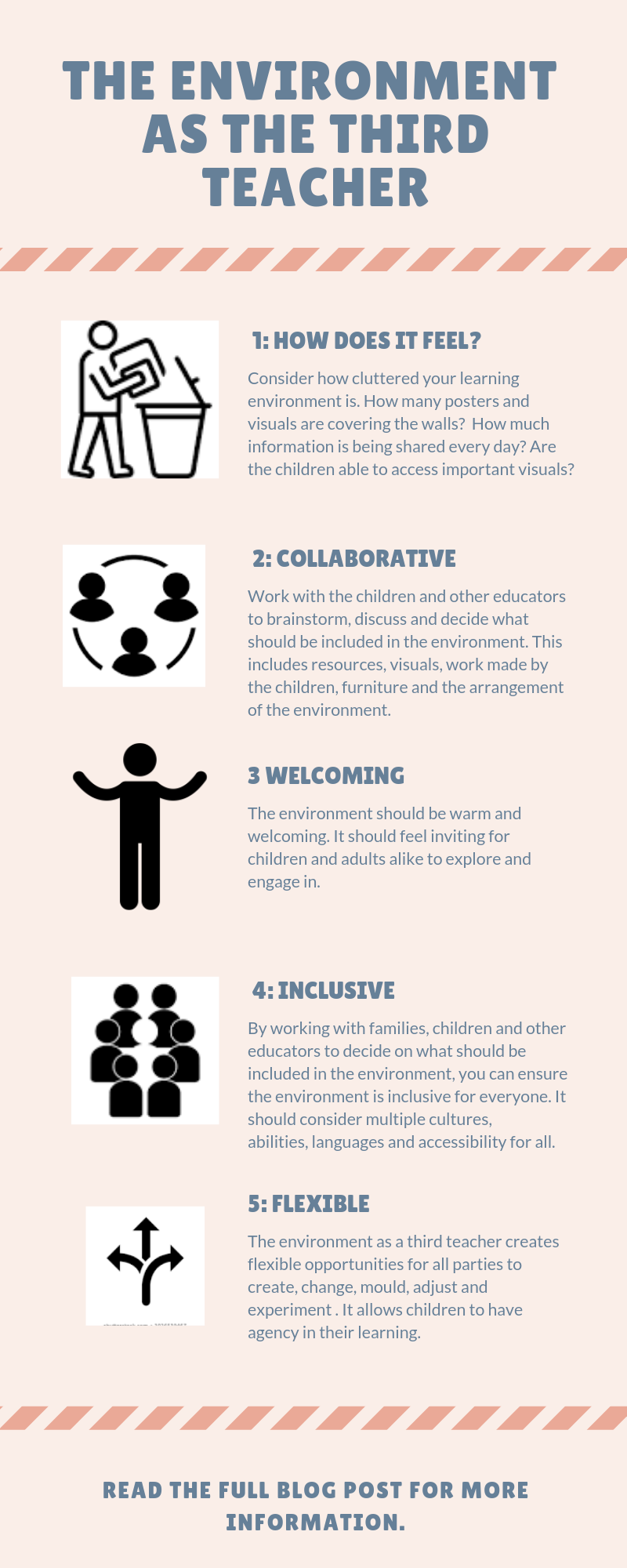
My first blog post is all about something that is an early years based idea but it can be implemented in any learning environment. The concept of the Environment as the Third Teacher involves creating inspiring, provoking and engaging learning areas where the children participate in decision-making of what is included, where things should be displayed and how they can be used throughout learning. For me, it has been a process over three years to get to a point where the children can interact with, create and plan what goes on in our classroom.
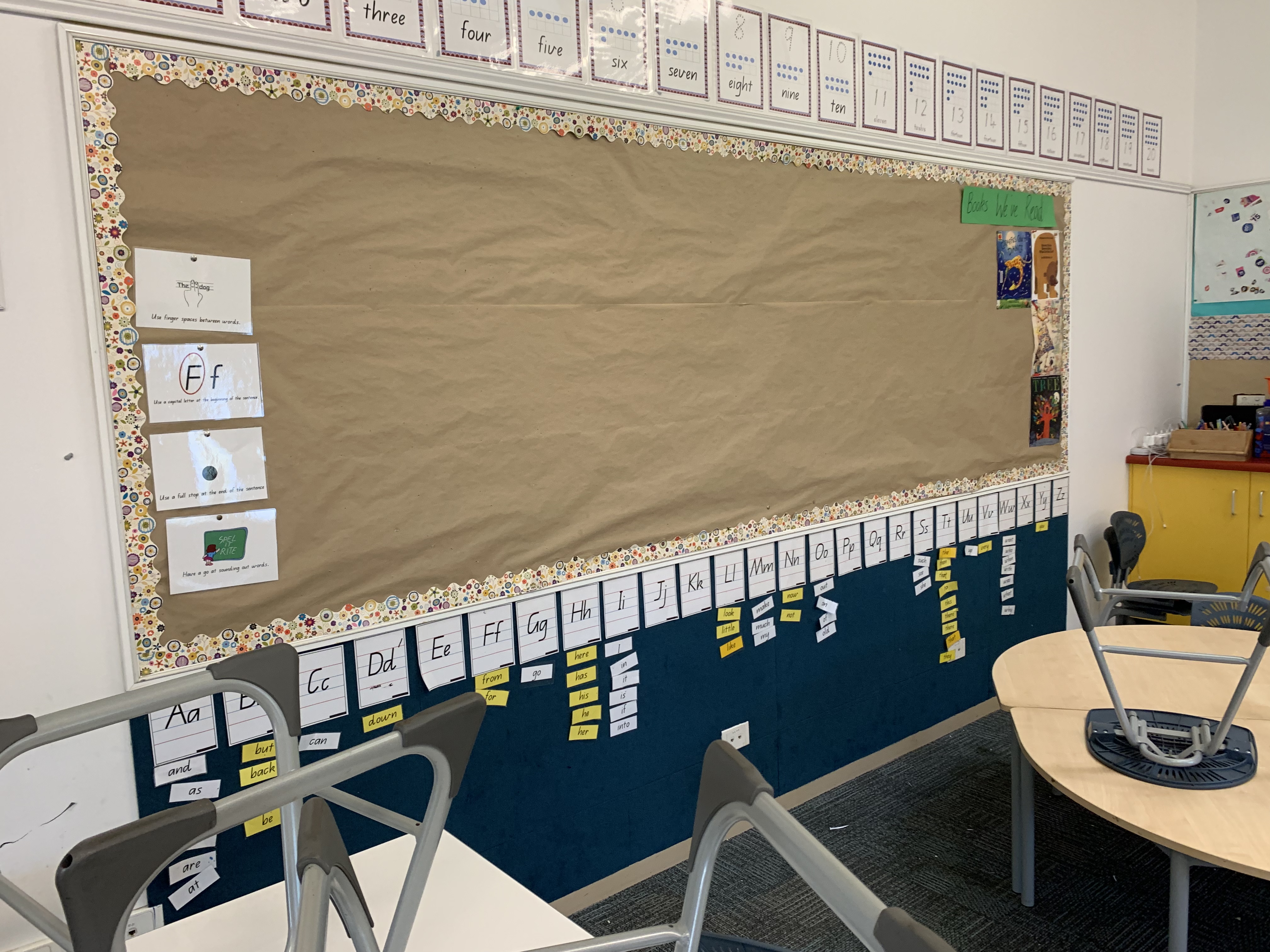
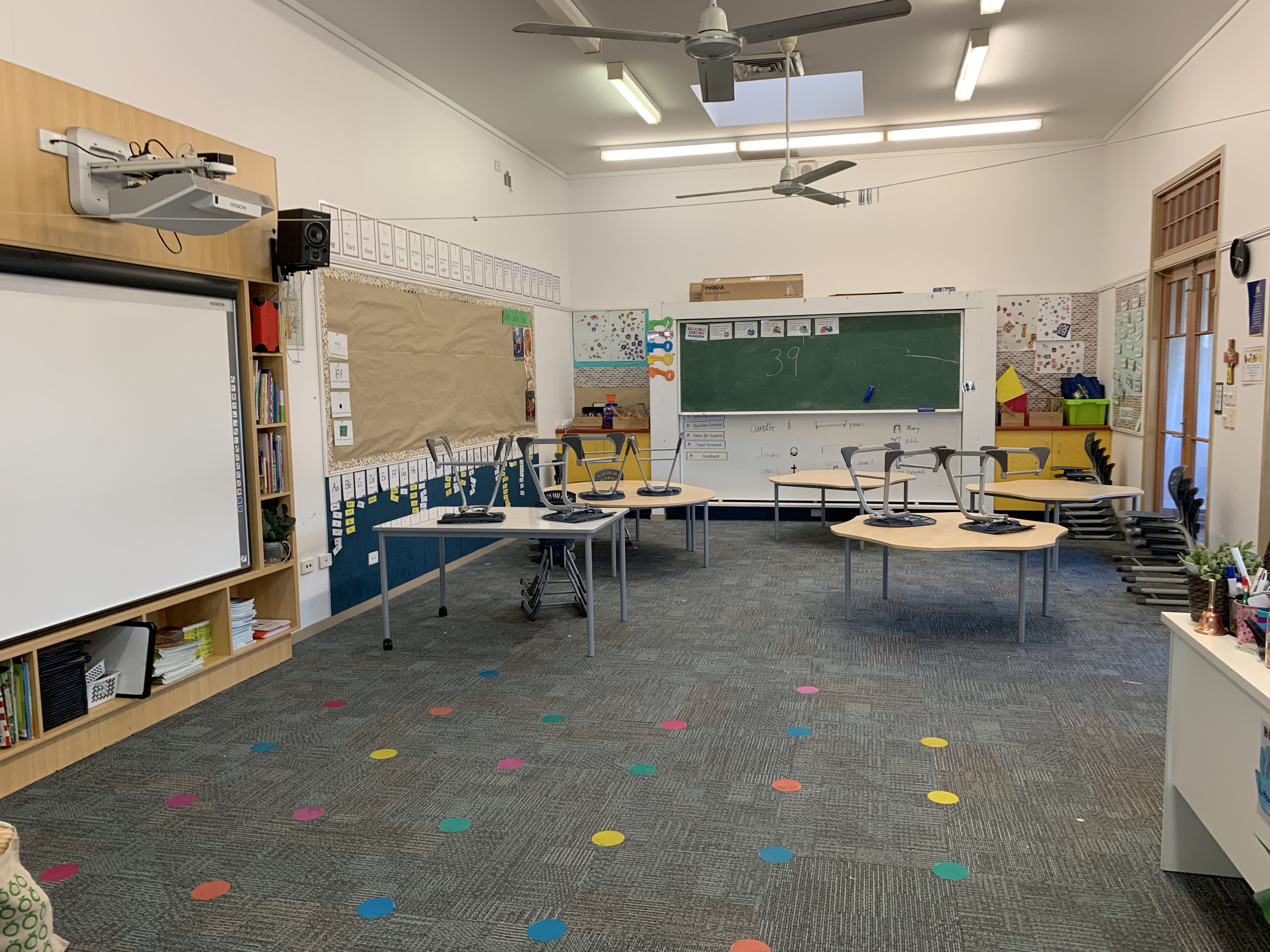
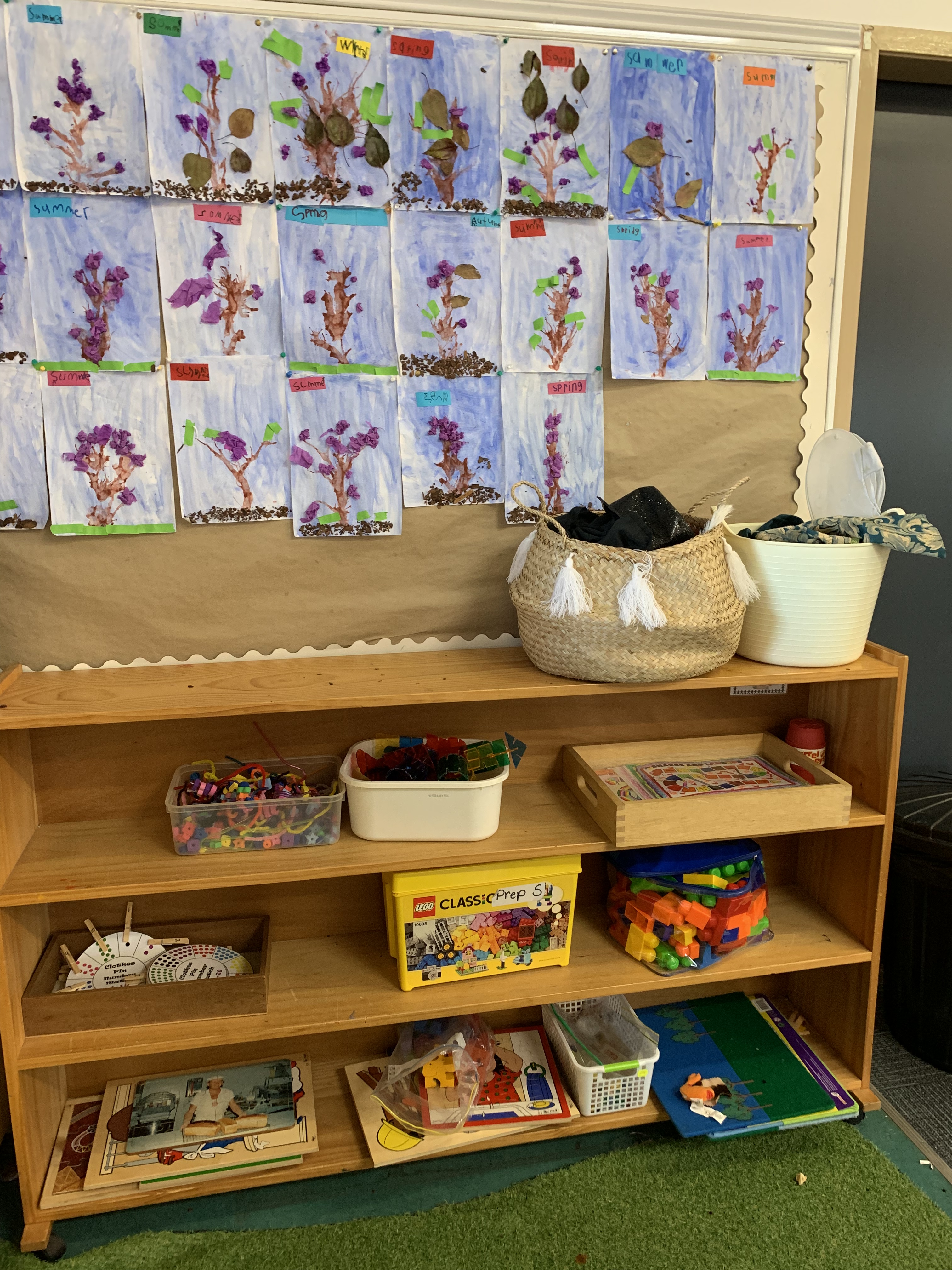
Being a prep teacher, reading is an important part of our every day learning. I brainstormed with my teaching partner how we can make our word walls child-friendly and interactive. Eventually we came up with a carpet wall where words are attached using velcro strips. The children help us to decide which words are important and interesting. These words are added to our wall regularly under the alphabet for ease of use. The yellow and white columns assist the children to visually find words easily. Furthermore, we ensure our areas are uncluttered and set out in a user friendly way. Research says that environments that are full of visual information are overstimulating, creating a chaotic feel for children. An overcrowded environment also leads to children being desensitised and they don’t take notice of the information. I always ensure the information I put up on the wall has either been developed with the children or explicitly taught and then consistently referred to throughout our daily learning activities. I’ve attached some photos of my current classroom.
I’m aiming to keep the blog posts brief so the learning environment will be explored further in my next blog post. If you have any questions, please feel free to leave a comment below.
Links to useful information regarding the learning environment as the third teacher:
Neutral colours help make the walls feel less busy.Simple systems in place – sit spots and flexible learning furniture to keep the room feeling less cluttered. Children help decide where their work should be displayed.
My name is Zoey Wicks and I have been a teacher for almost 8 years. Over the course of my relatively short career I have learned so much and wanted to find a way to share my knowledge, ideas, research and experience with others. I studied a Bachelor of Education (Early Childhood) and have taught Prep, Year 1, and a combined Year 5, 6, 7 class. I am currently undertaking a Master of Early Childhood degree and am continuing to learn so much that I hope will help inspire other educators. Early Childhood Education is my passion and I love teaching young children.
I am a reflective educator, constantly questioning why I choose the philosophy, pedagogy and practices that I implement on a daily basis and I am critical of how I approach teaching. This is one of the main areas I’d like to highlight through writing this blog. After discussions with many of my colleagues, I have come to the conclusion that teachers are very time poor, thus, I’d like to make linking research and practice easier through the use of infographics and short blog posts to keep teachers up-to-date with evidence-based practice examples. Thanks for joining me on this mission and I look forward to collaborating with other passionate educators along the way.


 Chalk and Talk Blog